

HIFU focuses ultrasound energy below the skin surface, where absorption of that energy produces heat. Controlled focal heating can trigger tissue remodelling and collagen production, which may lead to a modest tightening effect. Some systems can target deeper supporting tissue, including the SMAS, which lies beneath the skin between superficial fat and facial muscles. The depths and settings depend on the device, treatment area and individual anatomy. HIFU does not remove or reposition tissue as a surgical facelift does. Although treatment is performed without incisions, burns and other tissue injuries are possible, and results vary.
Dr Sknn Non-Surgical Facelift and Specific Targeted Lifting
HIFU
Benefits
Depths selected for treatment
Below the skin surface
Device-dependent targets
Individual anatomy
Tissue remodelling
Contraction
New Collagen Stimulation
Improved Elasticity
Firmness
Non-Surgical
Recovery varies
Treatment plan varies
HIFU uses focused ultrasound energy to heat selected tissue below the skin surface. This can stimulate tissue remodelling and collagen production, with the aim of improving mild to moderate skin laxity. The response varies between people.
HIFU is performed without surgical incisions and may provide modest tightening in suitable patients. It does not reproduce the results of a surgical facelift, and the treatment plan and recovery are individual.
Treatment may improve the appearance of lax skin in selected areas of the face and neck. The amount of lifting or firming varies, and some people may notice little improvement. Redness, swelling, tenderness and other adverse effects can occur.

What is unique about the HIFU non-surgical facelift?
HIFU uses focused ultrasound below the skin surface and is one of several non-surgical skin-tightening options. It does not reproduce the results of a surgical facelift, and burns and other tissue injuries are possible.
What is unique about the HIFU non-surgical facelift?
HIFU uses focused ultrasound below the skin surface and is one of several non-surgical skin-tightening options. It does not reproduce the results of a surgical facelift, and burns and other tissue injuries are possible.
At Dr Sknn we offer the following Non-Surgical Lifts
At Dr Sknn we offer the following Non-Surgical Lifts
Dr Sknn Non-Surgical Jaw Lift
Dr Sknn Non-Surgical Jaw + Neck Lift
Dr Sknn Non-Surgical Jaw Lift
Dr Sknn Non-Surgical Jaw + Neck Lift
Dr Sknn Non-Surgical Brow Lift
Dr Sknn Non-Surgical Neck Lift
Dr Sknn Non-Surgical Face, Brow, Jaw & Neck Lift
Dr Sknn Non-Surgical Brow Lift
Dr Sknn Non-Surgical Neck Lift
Dr Sknn Non-Surgical Face, Brow, Jaw & Neck Lift
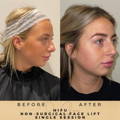


How does High Intensity Focused Ultrasound (HIFU) work?
What should I expect during the Consultation?
At Dr Sknn, during the consultation a medical history including a physical examination will be performed including photographs. During the consultation there will be an opportunity to discuss any concerns, expectations, results, or questions you may have. Prior to the treatment any post treatment advice and risks associated with the treatment are discussed ensuring you fully understand them and a consent form is signed. Furthermore, if it is a new area being treated a small patch test will be performed as part of the suitability assessment. Assessment and patch testing do not eliminate all treatment risks.

What to expect during the Treatment?
At Dr Sknn, a full consultation will be performed before treatment. Your clinician will assess suitability and explain the expected benefits, limitations and risks before you decide whether to proceed. Assessment does not eliminate all treatment risks.
The area being treated will be thoroughly cleaned, marked and photographed, you will be provided with googles for protection, a clear gel will be applied to the treated area. The hand piece applicator is then positioned to the area being treated, the area will then be treated, the hand piece is then moved to the neighbouring area of the skin until the entire area has been treated. Once treatment is completed skincare products will be applied.
I want the HIFU treatment immediately can I just have it done?
At Dr Sknn, safety and eligibility to treatment is of highest priority, prior to any treatment, as no one size fits all, a full consultation will be performed and if found suitable to the treatment, a patch test will be performed. After 48 hours post patch testing we are able to deliver the treatment.
What should I expect during the Consultation?
At Dr Sknn, during the consultation a medical history including a physical examination will be performed including photographs. During the consultation there will be an opportunity to discuss any concerns, expectations, results, or questions you may have. Prior to the treatment any post treatment advice and risks associated with the treatment are discussed ensuring you fully understand them and a consent form is signed. Furthermore, if it is a new area being treated a small patch test will be performed as part of the suitability assessment. Assessment and patch testing do not eliminate all treatment risks.
What to expect during the Treatment?
At Dr Sknn, a full consultation will be performed before treatment. Your clinician will assess suitability and explain the expected benefits, limitations and risks before you decide whether to proceed. Assessment does not eliminate all treatment risks.
The area being treated will be thoroughly cleaned, marked and photographed, you will be provided with googles for protection, a clear gel will be applied to the treated area. The hand piece applicator is then positioned to the area being treated, the area will then be treated, the hand piece is then moved to the neighbouring area of the skin until the entire area has been treated. Once treatment is completed skincare products will be applied.
I want the HIFU treatment immediately can I just have it done?
At Dr Sknn, safety and eligibility to treatment is of highest priority, prior to any treatment, as no one size fits all, a full consultation will be performed and if found suitable to the treatment, a patch test will be performed. After 48 hours post patch testing we are able to deliver the treatment.
Frequently Asked Questions
How Does HIFU Stimulate Collagen Production?
Focused ultrasound produces heat in selected tissue beneath the skin. The resulting tissue response can stimulate new collagen formation, with a gradual and variable tightening effect. The ultrasound mechanism does not require injected fillers; a contact gel and skincare products may still be used during the treatment.
Can HIFU Replace a Face Lift Procedure?
HIFU will not duplicate the results of a surgical facelift. It may be an option for some people with mild to moderate skin laxity who are considering a non-surgical approach. Suitability, expected benefit and alternatives need individual assessment, especially after previous cosmetic procedures.
How Long Will a HIFU Treatment Take?
The length of the treatment will depend on the area being treated and your individual treatment plan. A full face and neck procedure typically takes approximately 60-90 minutes. A partial face treatment can take around 30 minutes.
What improvement can I expect?
HIFU may improve mild to moderate skin laxity in selected areas, such as the brow, lower face or neck. It does not remove excess skin, and the degree of lift varies. Your clinician will assess the area, explain realistic limits and confirm whether HIFU is appropriate.
Will I Need to Take Time off Work?
Many people have little recovery time after HIFU, but this varies. Redness, swelling, tenderness or bruising can affect your usual activities. Follow the aftercare advice provided for your treatment and discuss any concerns with the clinic.
What Does HIFU Feel Like?
You may feel heat, tingling or discomfort during treatment, and comfort levels vary. Tenderness or other discomfort can continue afterwards. What you feel during treatment does not establish how much collagen will form or predict your final result.
When can I expect results?
Some people notice an early change, while improvement may develop over two to three months and continue for up to six months. The timing and degree of lifting or firming vary; a particular result is not guaranteed.
How long do results last?
The degree and duration of any firming benefit vary, and skin continues to age. A maintenance treatment at 12 months is the current clinic recommendation, but suitability and the need for any repeat treatment must be reassessed.
Every how long can I have the treatment?
A maintenance treatment at 12 months is the current clinic recommendation, but suitability and the need for any repeat treatment must be reassessed.
Will I need a follow up?
Yes, after treatment you require a follow up at 6 weeks and again after 12 weeks.
How Many HIFU Treatments Will I Need?
Some people may need only one initial treatment, while others may need further treatment or a different approach. However this may be based on the degree of skin laxity, the biological response to ultrasound energy and the individual’s collagen-building process, some clients may benefit from additional treatments. Because skin continues to age, future touch-up treatments can help clients keep pace with the body’s natural aging process.
Are There Any Side Effects?
Possible effects include redness, swelling, tenderness, tingling, pain or bruising. Their severity and duration vary; they do not always settle within a few hours. Burns, blistering, pigment changes, nerve effects and other tissue injuries are also possible. Your clinician will explain the risks relevant to your treatment before you decide whether to proceed.
What is the After Care Advice post HIFU treatment?
Some of the post-treatment advice is listed below. Please note that during the consultation you will be provided with a complete list. Redness, swelling or bruising can occur after treatment. Blistering after treatment needs prompt medical assessment. Contact the clinic immediately; if you suspect a burn or cannot obtain prompt clinical advice, seek help from NHS 111. Do not put creams or ointments on a suspected burn or burst a blister yourself. Your clinician will provide aftercare advice tailored to your treatment and skin.
Who is unsuitable for the HIFU treatment?
Some of the contraindications are listed below. Please note that during the consultation we will assess suitability for the treatment
Age below 18
Coagulation disorders (Haemophilia)
Pregnancy, recent pregnancy or breast feeding
Heart conditions including pacemaker
Am I suitable for the treatment?
A good candidate is someone with skin that has relaxed to the point of, an often feeling, less firm. Typically, those in their thirties and older who have mild to moderate skin laxity are good candidates. However prior to suitability a consultation will be performed to determine eligibility.
How do I prepare for the treatment?
Some of the pre-treatment advice is listed below. Please note that during the consultation you will be provided with a complete list.
One week before the treatment:
A Hydrafacial treatment is recommended one week before to help remove the dead skin before treatment.
Do not use products containing retinol or strong AHA fruit acids on the treatment area for 3-5 days before your HIFU treatment.
Avoid any heat (example: sunbeds, steam, sauna etc.) on the treatment area for 12 hours prior to your HIFU treatment.
I have had other procedures done recently can I have the HIFU treatment?
Depending on the type of other procedures performed there are specific wait times needed for before and after a HIFU treatment. During the consultation we will discuss which treatments, if any, have been done previously and advise recommended waiting times.
How many treatments will I need?
Some people may need only one initial treatment, while others may need further treatment or a different approach. A maintenance treatment at 12 months is the current clinic recommendation, but suitability and the need for any repeat treatment must be reassessed.
Is there any downtime?
Many people have little recovery time after HIFU, but this varies. Redness, swelling, tenderness or bruising can affect your usual activities. Follow the aftercare advice provided for your treatment and discuss any concerns with the clinic.
Does it require Surgery?
HIFU does not require surgical incisions. It uses focused ultrasound to heat selected tissue beneath the skin, but burns and other tissue injuries are possible. Non-surgical treatment does not mean risk-free treatment.